
Agriculture Loans in Pakistan: Farm, Tractor, Dairy and Poultry Finance — Eligibility, Limits and How to Apply
November 18, 2026
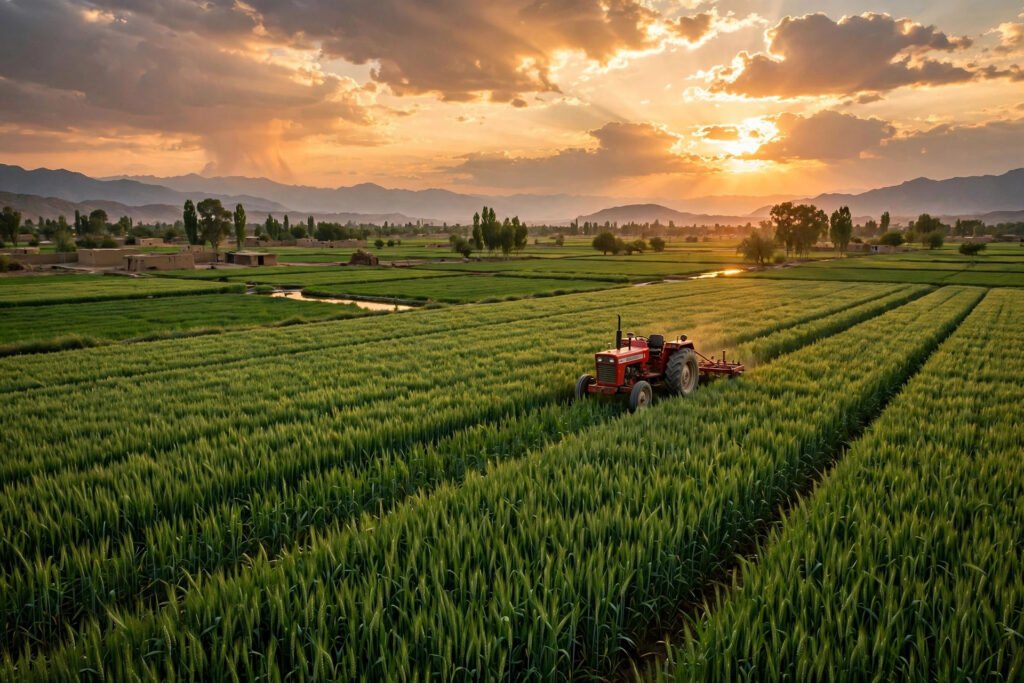
Farming in Pakistan runs on credit — seed, fertiliser, diesel, feed and machinery all have to be paid for months before the crop or milk is sold. Banks lend for this under State Bank of Pakistan (SBP) rules for agriculture financing, and each bank sets out its own products, limits and paperwork in an agriculture credit manual.
This guide explains how that system works in practice, using Soneri Bank’s Agriculture Credit Manual (approved 15 June 2026) as the example. The products and limits are Soneri Bank’s; the underlying rules — who can borrow, how the loan amount is worked out, what security is needed and what insurance is compulsory — follow SBP’s framework and are similar across banks. Always confirm the current rates and charges with the bank before applying, because markup and SBP indicative rates change.
Who can apply?
A bank will normally only consider an applicant who:
- Is aged 18 to 70 and has at least three years of farming experience
- Holds a valid CNIC, verified through NADRA Verisys, and has a bank account with AML/KYC completed
- Is a genuine farmer or self-cultivator — proved with Khasra Gardawari, Form-VIII, a Bonafide Certificate or a Digital Survey Report
- Has a clean eCIB (credit history) report — a written-off loan disqualifies the applicant, and any overdue amount needs a clearance letter first
- Can offer acceptable security (see below)
Politically exposed persons go through extra screening, and the property offered as security must be unencumbered, with a legal opinion where the amount requires it.
What can you borrow for?
Farm production loan (revolving, up to 3 years). Working capital for sowing, growing, harvesting and marketing crops, vegetables and fruit — seed, fertiliser, pesticide, diesel and labour. It is renewed each year after a short annual “clean-up” (the account must be cleared for at least one day).
Farm development loan (1–10 years). Longer-term spending such as land development, tube wells and farm buildings.
Tractor loan (1–10 years). For buying a tractor; the manual requires a minimum of 5 acres of land. The tractor is jointly registered in the bank’s name (hypothecation / HPA).
Dairy, poultry, fish and cattle (non-farm). Each has a working capital facility (revolving, up to 3 years) and a development loan (1–10 years) — for example, buying animals or birds, feed, sheds and equipment.
Value-chain / contract farmer financing. For growers supplying a sugar or rice mill or a milk/meat processor, backed by a corporate guarantee from the processing unit.
Financing against Electronic Warehouse Receipts. Short-term finance (maximum 6 months) against stored produce held under an electronic warehouse receipt.
Islamic options. The manual also includes Shariah-compliant versions, including Mustaqeem Tractor Finance under Ijarah (maximum Rs. 4 million, 1–5 years), Murabaha for poultry (maximum Rs. 10 million, each Murabaha up to 180 days) and Salam for value-chain financing.
How is the loan amount calculated?
The starting point is SBP’s indicative credit requirement per acre for each crop. The manual uses the rates in SBP Circular Letter No. 01 of 2022, including: Wheat Rs. 100,000 per acre; Rice Rs. 95,000; Cotton Rs. 102,000; Sugarcane Rs. 142,000; Maize (hybrid) Rs. 106,000; Potato Rs. 162,840.
For a new customer, the bank takes the higher of the Rabi or Kharif season requirement — not the sum of both. So a farmer growing 10 acres of wheat has an indicative requirement of about Rs. 1,000,000 (10 × Rs. 100,000).
That is a ceiling for the calculation, not an automatic approval. The final limit is also capped — broadly, at 80% of the property’s PIU value or 50% of its assessed / forced-sale value, and up to 90% where the security is a lien on term deposits or saving certificates. The bank then checks the farmer can actually repay: the manual’s debt-burden rule is that markup should not exceed 30% of periodical income, the loan plus annual markup should not exceed 70% of annual income, and net cash flow must be positive.
What security and documents are needed?
Typical requirements include:
- Security: a charge on agricultural land through the passbook, a mortgage of urban property, a lien on liquid securities, a guarantee from the processing unit, hypothecation of the asset (for example, the tractor), and the personal guarantee of up to two male legal heirs
- Land proof: Khasra Gardawari, Form-VIII or a digital survey report showing the applicant actually cultivates the land
- Identity and credit checks: CNIC and NADRA Verisys, eCIB report, and pre-screening / customer due diligence
- Legal opinion: required above Rs. 3 million where the security is a passbook charge; the bank may ask for one below that amount depending on the collateral
What does it cost?
Markup is charged at the Timely Payment Mark-up Rate (TPMR) — the rate approved for the customer, based on the KIBOR benchmark plus the bank’s spread — as long as payments are made on time and within any grace period (the manual allows up to 30 days). If payment is late, the Standard Mark-up Rate (SMR) applies. The manual states SMR as “TPMR + 5.00% or 30%” — confirm with the bank exactly how that is applied to your facility, and check the current Schedule of Charges for the processing fee, which is recovered at disbursement or renewal.
Insurance is compulsory for the main crops
Under the Crop Loan Insurance Scheme (CLIS), insurance is mandatory for five major crops — wheat, rice, cotton, sugarcane and maize. Livestock insurance (LISB) covers up to 10 dairy animals, and poultry, tractors and other assets need comprehensive insurance. The government reimburses part of the crop insurance premium through SBP on a half-yearly basis (30 June / 31 December).
How the process works
- Field visit by the Agriculture Credit Officer, who verifies the land, the crop and the applicant
- Credit checks — eCIB, NADRA Verisys and screening
- Credit proposal prepared in the bank’s system and approved through the branch, regional and head-office agriculture chain, depending on the amount
- Offer letter (Banking Facility Offer Letter) accepted by the customer, then charge creation on the security and clearance from the credit administration department
- Disbursement — payments for tractors and machinery go directly to the supplier by pay order / demand draft; construction finance is released in 25% + 25% + 50% stages
- After disbursement: annual review and renewal, stock inspection every quarter or half-year, and classification under SBP’s prudential regulations if repayment slips
A note for small farmers: check Zarkhez-e too
In October 2025 SBP launched a separate collateral-free digital scheme for small and subsistence farmers, branded Zarkhez-e (“Asaan Digital Zarai Qarza”), for landowners and tenants holding up to 12.5 acres in Punjab and Khyber Pakhtunkhwa, 16 acres in Sindh and 32 acres in Balochistan, at up to Rs. 100,000 per acre (capped at Rs. 1 million for landowners and Rs. 500,000 for tenants). If you hold only a few acres, that scheme may fit better than a conventional secured agriculture loan — check the current SBP term sheet before choosing.
Before you apply
- Confirm the current per-acre rates, markup (TPMR), processing fee and insurance premium with the bank — do not rely on a 2022 circular alone
- Keep your land record, CNIC and eCIB clean and up to date; most delays come from mismatched land records or an old overdue entry
- Ask for the offer letter in writing and read the repayment dates, the clean-up requirement and what happens if a payment is late
- Remember this article is general information, not financial advice. Loan decisions depend on your land, income and credit history.
Disclaimer: This article is for information only and is not financial advice. Product names, limits, markup and eligibility are those in Soneri Bank’s Agriculture Credit Manual (ECC approval 15 June 2026) and SBP rules as cited there; the bank may change them. Verify the current terms with Soneri Bank or SBP before applying.